Study While Walking: What the Research Actually Says
Walking while you study is not a memory hack, and the research does not claim it is. What it actually does is turn dead hours into study hours — here is what the evidence supports, where the costs are, and how to set it up so it works.
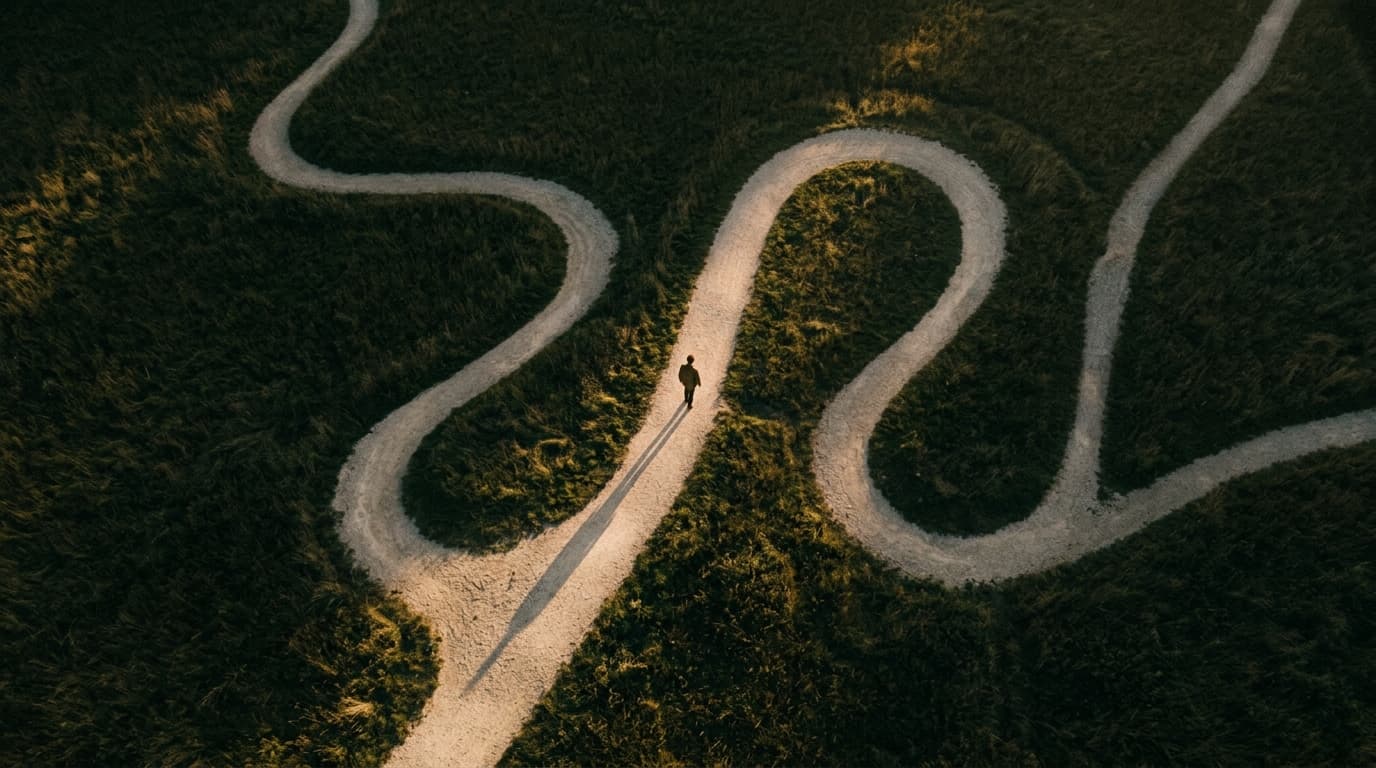
You have forty minutes of walking in your day and two hundred pages due Thursday. Somewhere in that gap sits the idea that you could do both at once. The internet is split between people insisting it changed their degree and people insisting you absorb nothing, and neither camp shows their work.
Here is the honest version.
The short answer
Studying while walking does not make you learn better. The evidence does not support that claim and you should be suspicious of anyone selling it.
What it does is make otherwise unusable hours usable. That is a logistics win, not a cognitive one — and for most students it is the bigger of the two, because the constraint on finishing your reading was never comprehension. It was time.
What the research actually supports
Three separate things get blurred together in this conversation. They are worth pulling apart, because only one of them is about learning while you move.
Walking is good for your brain around study time. Moderate aerobic activity produces short-term improvements in attention and executive function afterwards. This is well established, and it is an argument for walking before you sit down to work, or between sessions — not for what happens during the walk itself.
Walking helps creative and divergent thinking. A Stanford study by Oppezzo and Schwartz found that walking substantially increased performance on creative-thinking tasks, both during the walk and shortly after. Useful when you are trying to find an argument for an essay. Less relevant when you are trying to hold twelve cranial nerves in your head.
Doing two things at once has a cost. This is the part the enthusiasts skip. Dual-tasking reliably degrades performance on one or both tasks, and the degradation grows with how much attention each one demands. Walking on a flat, familiar, empty path is close to automatic and costs you very little. Walking through traffic, on uneven ground, or somewhere you have to navigate is not automatic at all, and it will take the attention your textbook needed.
Put together, the research says something modest and useful: walking is a good context for light cognitive work, a bad one for hard cognitive work, and generally good for the brain regardless. Nobody has shown it makes a difficult chapter stick better than reading it at a desk would.
Where the actual win is
Add up the walking in a normal week. Twenty minutes to campus and twenty back, four days a week, is a little over two and a half hours. Add the walk to the shop, the loop around the block after dinner, the ten minutes to the bus.
At a standard narration pace of roughly 150 words per minute, two and a half hours is around 22,000 words — a substantial textbook chapter, or two shorter ones, every single week. Not instead of your desk time. On top of it.
That is the whole case. Not better retention per hour. More hours. If you want the arithmetic for your own reading list, the audiobook speed calculator converts word counts into walking minutes.
Keeping the dual-task cost small
The cost is real but it is controllable, and almost all of the control is in what you choose to listen to and where.
- Walk a route you do not have to think about. Familiar, flat, few crossings. Every decision the pavement demands is attention the chapter does not get.
- Listen to material you have met once before. This is the single biggest lever. A second pass over a chapter you have already read lands well by ear. A first pass through unfamiliar dense theory mostly does not.
- Slow down for hard material, speed up for review. 1x on first contact, 1.5x or faster on a re-listen. Speeding up unfamiliar content is where most people conclude, wrongly, that audio does not work for them.
- Do not multitask the multitask. Walking plus listening is two things. Walking plus listening plus replying to messages is three, and the chapter is the one that loses.
- Let the hard bits go. If you drift for ninety seconds, keep going. Rewinding to catch every sentence turns a relaxed second pass into a frustrating first one.
What carries by ear, and what does not
| Material | Works while walking? |
|---|---|
| Narrative and conceptual prose | Yes — this is the format's home ground |
| Definitions and terminology | Yes, and repetition by ear is how vocabulary sticks |
| Case studies, history, theory | Yes |
| Reviewing something you have already read | Best possible use |
| Step-by-step processes | Partly — you will want to see it once too |
| Equations and derivations | No |
| Diagrams, charts, anatomical figures | No |
| Data tables | No |
The bottom half of that table is not a small caveat for STEM students, and it is why we say plainly that audio is a layer rather than a replacement. The working pattern is a concept pass by ear on the walk, then the book open at the desk for the maths. Engineering students in particular hit this constantly — we mapped what does and does not survive the conversion in audiobooks for engineering students.
Setting it up so it actually happens
The failure mode is almost never the walking. It is that the chapter is not in your ears when you leave the house.
Most course texts have no audiobook and never will, so the practical route is converting your own copy: upload the PDF or EPUB, get chapter-aware audio, and download the chapters you were assigned as MP3s before you go. Files play offline, which matters more than you would expect — dead zones, basements, and running out of data all end a listening habit fast.
Two things worth doing once:
Queue the night before. Decide what tomorrow's walk covers while you are looking at your reading list, not while standing at the door.
Check the lock screen works. If pausing means pulling the phone out and unlocking it, you will stop within a week. Chapter-to-chapter playback should continue with the screen off and the phone in your pocket.
If you are still choosing a method, how to listen to textbooks compares every route including the free readers already on your phone, and audio textbooks covers the full landscape. For the student-specific workflow, you can study on the move with audio textbooks using the chapters you have actually been assigned.
Common questions
Does studying while walking actually work?
For the right material, yes — but not because walking improves learning. It works because it converts commuting and errand time into study time. Reviewing material you have already read once is where it performs best. First contact with difficult new theory is where it performs worst.
Is it better to walk or sit while studying?
Sitting is better for difficult first-pass material, where you need to stop, reread and take notes. Walking is better for review, terminology and conceptual prose — and it is the only one of the two available while you are getting somewhere. Most students who do this well use both for different passes rather than choosing.
What are the benefits of walking while studying?
Three, in order of how well supported they are: you gain study hours you did not have, you get the general cognitive benefits of moderate exercise, and repeated exposure to the same material becomes cheap because re-listening costs nothing. The first is the reason to do it.
Will I remember what I heard on a walk?
About as well as anything else you have heard once — which is to say, partially. Retention comes from repeated exposure, and walking makes repetition nearly free. One listen is not a study method. Four listens across a week, at no extra cost in desk time, is.
Does it work for maths and science?
For the concepts, definitions and worked reasoning, yes. For equations, derivations and figures, no — those need your eyes, and any tool claiming to narrate them usefully is overselling. Use the walk for the conceptual pass and keep the problem sets at the desk.
How fast should I play it?
1x for material you are meeting for the first time, 1.25x to 1.5x for a second pass, faster only for revision of things you know well. Most people who dislike audio study were listening too fast to unfamiliar content.