Audiobooks for Engineering Students: What Works by Ear, and What Never Will
Search for engineering audiobooks and you get astronaut memoirs and leadership books. Half of engineering school genuinely cannot work as audio. This is an honest map of the half that can, and how to get it into your ears.
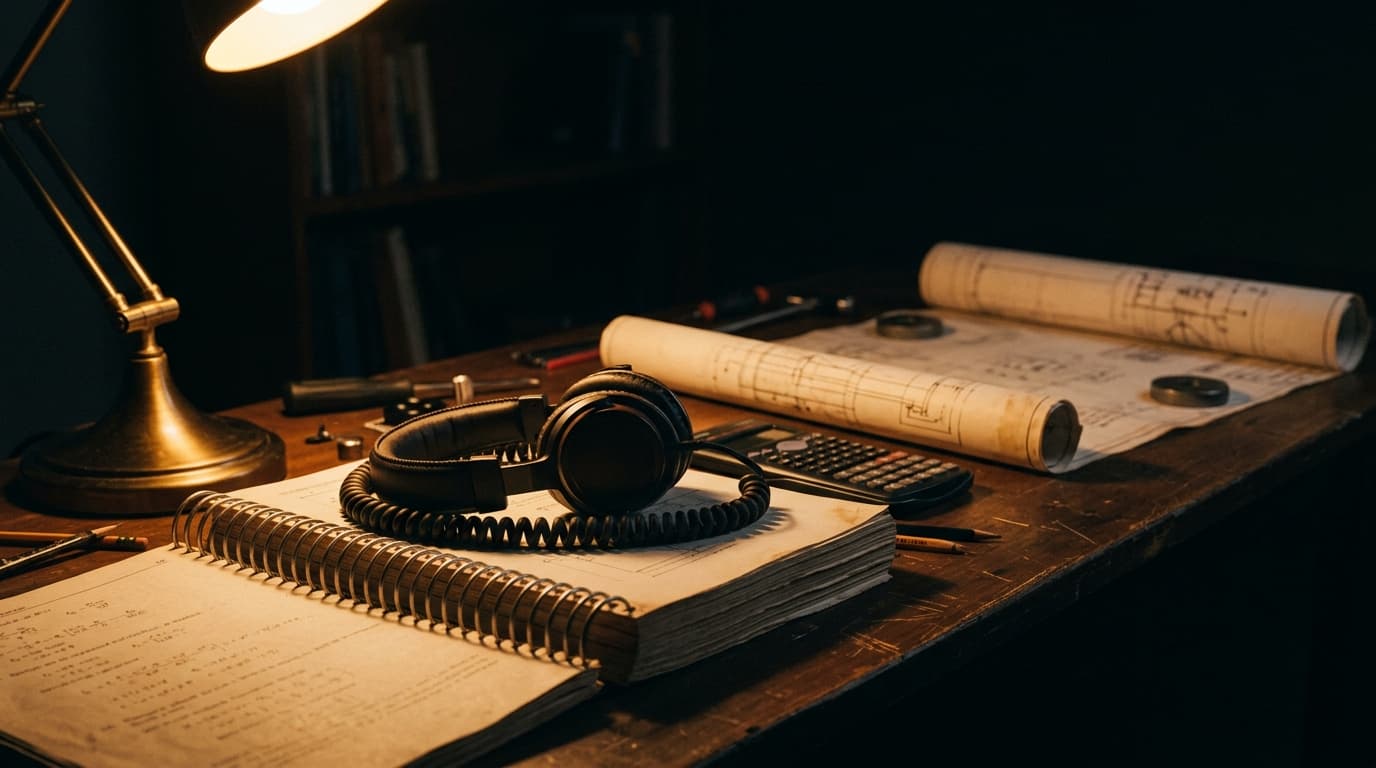
Search for engineering audiobooks and the results are almost funny: Apollo-era memoirs, books about bridges falling down, leadership advice for engineering managers. Great listening, and completely useless the week your statics problem set is due.
The honest reason is that half of engineering education genuinely does not work as audio, and most tools selling audio for studying will not tell you that. This guide will. It maps which parts of an engineering degree actually work by ear, which never will, and how to convert the workable half from the files you already have.
The half that never will
Say it plainly first: derivations, worked problems, circuit diagrams, free-body diagrams, and anything you learn by doing with a pencil does not translate to audio. A derivation read aloud symbol by symbol is noise. No narrator, human or synthetic, fixes that, because the problem is the medium, not the voice.
If your week is dominated by problem sets in thermo, circuits, or structures, audio is a supplement at best, and anyone promising otherwise is selling something. That is the boundary. Everything on the other side of it, though, is bigger than most engineering students expect.
The half that works by ear
Concept-heavy chapters. Every engineering textbook alternates between math and prose, and the prose is where the understanding lives: why a material fails, what a control system is compensating for, how a process actually flows. Those sections narrate well, and hearing them before lecture means the math lands on prepared ground.
The courses nobody warns you about. Engineering economics, project management, ethics, materials science survey courses, safety and standards: whole classes that are mostly reading, assigned in programs full of students who chose the major to avoid mostly-reading classes. These convert to audio almost losslessly.
Papers and literature reviews. By final year you are reading journal papers, and a paper's introduction, background, and discussion sections are prose. Listening to a stack of PDFs on the commute is a real capstone-season tactic.
The review pass. The nights before an exam, re-reading chapters you have already worked through, is the single best audio use case in engineering: you know the equations, you need the connective tissue back, and 1.5x through familiar material rebuilds it fast.
What actually exists in audio
Official audiobook editions of engineering textbooks are effectively nonexistent, for the honest reason above: publishers know the derivation chapters cannot carry audio, so they record none of it. What does exist: engineering podcasts (good for staying interested, not for the syllabus), the memoirs and disaster histories that fill the Audible category (genuinely worth a listen in the summer), and accessibility libraries like Learning Ally and Bookshare for readers who qualify through a campus disability office.
For the assigned reading itself, converting your own copies is the only route, same as nursing students discover with their own reading lists.
Converting the workable half
Upload the textbook PDF or EPUB to Audionarrator and chapter detection maps the book's structure in about a minute. Then the per-chapter model does something specifically useful for engineering: you convert the chapters that work by ear and simply skip the ones that do not. The materials-science survey chapter converts; the problem-set appendix stays on paper. Your quota goes where audio actually helps.
The equations question, answered straight: equations, code blocks, and figures are skipped in narration, deliberately. What remains is the prose argument of the chapter, which for concept review is exactly what you want, and for a derivation chapter is not enough, which is why you skip converting those. The tool and the honest boundary agree with each other.
Beyond that it behaves like a real audiobook: chapter list mirroring the book, resume across devices, 0.75x to 2x playback, per-chapter MP3 downloads for the commute. Papers work the same way through the PDF converter, which handles a 12-page journal article as readily as a textbook.
The honest map
| Resource | Good for | Useless for |
|---|---|---|
| Engineering podcasts | Staying engaged with the field | Anything on your syllabus |
| Audible's engineering shelf | Memoirs, disaster histories, summer motivation | Coursework |
| Learning Ally / Bookshare | Qualifying readers, some real textbooks | Broad coverage |
| Converting your own files | Concept chapters, papers, review passes, the reading-heavy courses | Derivations and problem sets, by design |
For the full landscape across every subject, see the complete guide to audio textbooks.
Common questions
Are there official audiobooks of engineering textbooks?
Essentially none. Publishers do not record books whose core chapters are equations, and that policy is unlikely to change. The workable route is converting the prose-heavy chapters of the copies you own.
Does audio work for math-heavy courses at all?
As a supplement only, and this guide will not pretend otherwise. Hearing the conceptual framing before and after working problems helps the ideas connect, but nobody learns to solve circuits by listening. Use audio for the concept layer and the review pass, and keep the pencil for the rest.
What about journal papers and technical reports?
One of the best engineering audio use cases. Introductions, background sections, and discussions are prose and narrate well. Figures and equations are skipped, so keep the PDF handy for the results section, but a literature review's volume problem is exactly what commute listening solves.
Is converting my textbooks and papers allowed?
Converting copies you own for private study sits on the same ground as using a screen reader. Files are processed privately, never shared or used for training, and deleting a book removes both the text and the audio.
What does it cost as a student?
The first chapter converts free at any length, and every account starts with 5,000 free words plus a monthly refill. The $9/month plan covers roughly a chapter a week, which fits the concept-chapter-plus-review rhythm that audio actually earns in an engineering schedule.